

7 Signs You Are Addicted To 7OH/Kratom And How To Fix It
Addiction to alkaloids from 7OH/Kratom leaves a longer impact than you can imagine. Especially if you started using them for relief or pain management. You overdo the product and lose the one thing that kept you going once. Now you have to heal all naturally. However, here is the best thing you can do, but it takes you a few steps back. Trust me! This is coming from someone who went through all that. Therefore, you must read the article to understand the reality. I am not going to portray something good or bad, just the facts. However, it may impact some of you. But I will try my best to be as real as possible. My story can help you understand alkaloids and their effects better. Meanwhile, you will be able to decide if to start, when to slow down, and when to stop.
🔄 After 7OH/Kratom Withdrawal
What exactly is alkaloid withdrawal? The physical and psychological symptoms occur when we reduce or stop taking alkaloids, in this case 7oh products. 7OH became my liability after one point. Anyhow, it started with a pain-relieving substitute and kept me on my feet. This thing hits the nervous system. Therefore, our system becomes temporarily unbalanced.
🩺Common alkaloid withdrawal symptoms
Physical symptoms
- Fatigue and weakness
- Body aches and muscle pain
- Sweating or chills
- Nausea, diarrhea, loss of appetite
- Headaches
- Sleep disturbances (insomnia or vivid dreams)
- Restlessness or tremors
Psychological symptoms
- Anxiety or panic
- Irritability and mood swings
- Depression or low motivation
- Brain fog or difficulty concentrating
- Cravings
🔍 Understanding 7OH and Kratom Addiction
Addiction to kratom alkaloids develops through a process similar to other opioid dependencies. As for 7OH, it is mainly the potency, which is much stronger than regular mitragynine or usual leaf. As a result, the dependency can spread more rapidly and with greater intensity.
The challenge with 7OH specifically is its potency, being 10-15 times stronger than regular mitragynine, which means dependency can develop more rapidly and with greater intensity. What makes kratom addiction particularly insidious is its gradual progression. Meanwhile, kratom dependency creeps in slowly, normalizing itself into your daily routine until one day you realize you can’t function without it.
🚨 The 7 Clear Signs of 7OH/Kratom Addiction
📈 Sign #1: Escalating Tolerance
The clearest warning sign is needing progressively larger doses to achieve the same effects. If you started with 2 grams of kratom powder and now require 10-15 grams, or if your 5mg 7OH dose has climbed to 50mg or more, tolerance has taken hold. You might find yourself dosing more frequently throughout the day, or switching to more potent strains and concentrated alkaloids.
The euphoria and energy that initially attracted you to kratom become harder to access, leading to a frustrating chase for those first experiences. This tolerance indicates your brain chemistry has adapted to regular alkaloid presence.
⛔ Sign #2: Withdrawal Symptoms When You Stop
Perhaps the most definitive sign of physical dependence is experiencing withdrawal when you miss doses or attempt to quit. 7oh/Kratom withdrawal symptoms include:
- Physical symptoms: Muscle aches and pains, restless legs, hot and cold flashes, sweating, runny nose, digestive issues, and fatigue.
- Psychological symptoms: Anxiety, irritability, mood swings, depression, and intense cravings.
- Sleep disturbances: Insomnia despite exhaustion, or disturbed sleep with vivid dreams.
If you’ve ever woken up feeling terrible and immediately felt better after dosing, that’s withdrawal. If the thought of going a day without kratom fills you with dread because you know how uncomfortable you’ll feel, that’s dependence speaking.
❌ Sign #3: Loss of Control Over Usage
Addiction manifests as an inability to regulate consumption according to your own rules. You tell yourself you’ll only dose twice a day, but end up dosing four or five times. You promise yourself a tolerance break starting Monday, but Monday comes and goes without action. Failed quit attempts pile up. You might successfully stop for a few days, only to convince yourself “just this once” won’t hurt, quickly returning to previous usage levels.

💔 Sign #4: Neglecting Responsibilities and Relationships
As addiction progresses, kratom takes priority over previously important aspects of life. Work performance may slip as you doze during work hours or struggle with reduced motivation. Social activities lose appeal unless you’re comfortably dressed. Relationships suffer as partners or family members notice personality changes or your preoccupation with maintaining supply. You might cancel plans because you’re out of kratom, or feel anxious at social events where you can’t dose discreetly. Hobbies and interests that once brought joy feel less engaging compared to the reliable comfort of kratom.
⚠️Sign #5: Continued Use Despite Negative Consequences
A hallmark of addiction is persisting despite clear harm. Perhaps you’ve experienced:
- Financial strain from spending $300-500+ monthly on kratom
- Digestive issues, hair loss, or other health problems
- Relationship conflicts centered on your kratom use
- Concerns from loved ones that you’ve dismissed
When the negative consequences are obvious, but you continue anyway, rationalizing or minimizing the problems, addiction has overridden logical decision-making. You might tell yourself you’ll quit “once things settle down” or “after this stressful period,” but that time never seems to arrive.
💸 Sign #6: Spending Excessive Time and Money
Your life begins revolving around kratom logistics. You spend hours researching vendors, reading reviews, comparing strains, and alkaloid profiles. A significant portion of your budget goes toward kratom purchases, sometimes at the expense of other necessities. Anxiety about supply becomes constant. You maintain a stockpile “just in case,” and panic sets in when running low. You know your usual vendor’s restock schedule and have backup sources identified. Travel plans require ensuring adequate supply or confirming kratom availability at your destination.
😔 Sign #7: Using to Avoid Withdrawal Rather Than for Benefits
The final sign is perhaps the saddest: you’re no longer using kratom for its benefits but simply to feel normal and avoid withdrawal discomfort. The pain relief, energy, or mood enhancement that initially attracted you has vanished, replaced by a baseline dependence. You do not because you want to, but because you must. Missing a dose results in immediate discomfort rather than simply missing out on enhanced well-being. You’ve become trapped in a cycle of using just to maintain equilibrium, with the alternative being withdrawal suffering.
📋 Practical Tips for Successful Recovery
- Create a detailed reduction schedule: Write down exact doses and times. Track your progress daily. Seeing improvement on paper provides motivation during difficult moments.
- Manage withdrawal symptoms naturally: Exercise releases endorphins that partially compensate for reduced kratom. Hot baths ease muscle aches. Proper hydration and nutrition support your body’s healing. Sunlight exposure helps regulate mood and sleep.
- Identify and avoid triggers: Certain times, places, or emotional states trigger cravings. Recognize your patterns and develop alternative responses. Add a bed time herbal drink like Chamomile tea to ease your senses
- Build a support network: Recovery isolation is recovery failure. Connect with others who understand, whether online communities, local support groups, or trusted friends and family.
- Practice self-compassion: Slip-ups may happen. They don’t erase progress. Learn from them without spiraling into shame that drives further use.
💬 What Reddit and Online Communities Say
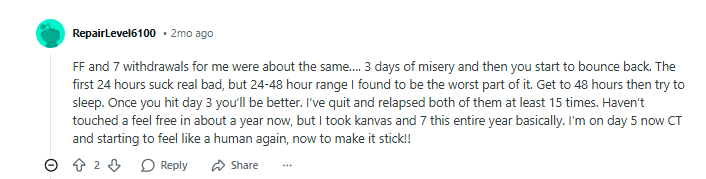
Success stories frequently emphasize that recovery is possible, though rarely easy. Most former users report that withdrawal peaks around days 3-5, with physical symptoms largely resolving within 2 weeks, though psychological challenges may persist longer. Successful strategies shared repeatedly include: slow, patient tapering rather than cold turkey; radical honesty about usage and struggles; exercise as a non-negotiable daily practice; journaling to process emotions; and staying connected to recovery communities for ongoing support.


🛡️ Prevention: How to Use Responsibly Moving Forward
If you successfully reduce or eliminate problematic use, future responsible consumption requires strict boundaries:
- Never use daily, implement mandatory 2-3 day breaks weekly minimum
- Maintain a maximum dose and never exceed it
- Use only for specific purposes (pain, energy) rather than habitually
- Regularly assess whether use remains beneficial or has become a dependency
- Avoid concentrated alkaloids like 7OH for casual use
Many recovered users find that kratom cannot be part of their lives in any form without triggering problematic patterns. Honor your own truth if you discover this applies to you.

🏷️ Why Choosing Quality Vendors Like Kures Matters
During tapering and recovery, vendor quality becomes crucial. Kures stands out because:
Clear alkaloid content information enables calculating exact doses when gradually reducing. Access to traditional kratom alongside concentrated alkaloids allows stepping down from 7OH to milder alternatives during recovery. Vendors prioritizing customer wellbeing over profit provide information supporting responsible use and harm reduction. During tapering, supply interruptions create crisis situations. Dependable vendors eliminate this variable.
🌿 References
🌅 Conclusion
Kratom addiction can feel overwhelming, like you’ve lost yourself to something that once seemed helpful. But your authentic self, the person you were before dependency took hold, is still there, waiting for you to reclaim your life. Recovery means rediscovering what genuinely brings you joy, peace, and fulfillment rather than relying on a substance to provide those feelings artificially. It means waking up without immediately calculating your dose, traveling without supply anxiety, and engaging fully with people you love.

Before You Submit Your Comment
- Share your serving amount (X mg) and how many times per day.
- Explain why the 1 mg threshold would negatively affect you.
Continue to Comment Form